
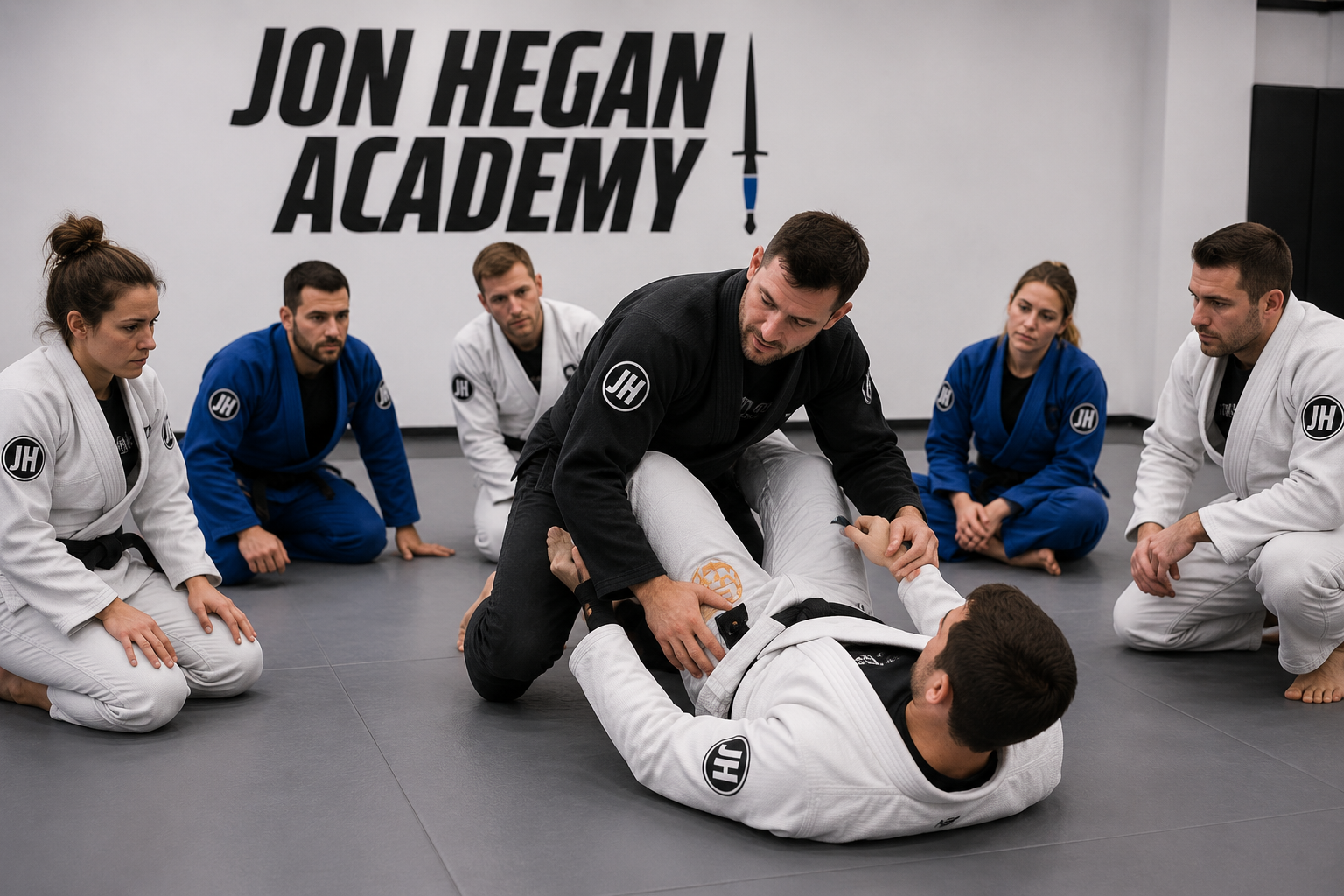
Starting Brazilian Jiu-Jitsu can feel overwhelming at first. New students often see experienced practitioners performing sweeps, submissions, and complex transitions and wonder where it all begins. The good news is that every BJJ practitioner starts with the same fundamental movements and positions.
Before learning submissions or advanced techniques, beginners focus on developing movement, balance, and positional awareness. These basics form the foundation of everything that follows.
Why Fundamentals Matter in BJJ
Brazilian Jiu-Jitsu is built around technique rather than strength. The movements taught in the early stages of training help students create space, escape bad positions, and control opponents effectively. Many experienced black belts still use the same fundamental techniques they learned during their first few months of training.
Mastering the basics early will make every future technique easier to learn.
The Hip Escape (Shrimping)
One of the first movements almost every beginner learns is the hip escape, often called shrimping.
This movement teaches you how to create space between yourself and an opponent. It is used when escaping from positions such as side control and mount, and is considered one of the most important movements in Brazilian Jiu-Jitsu.
Do not be surprised if you spend a lot of time practising this movement during your first few classes.
The Bridge
Another fundamental movement is the bridge, sometimes referred to as the upa.
The bridge involves driving your hips upwards to disrupt an opponent’s balance or create space to escape from underneath them. It is one of the most effective ways for beginners to escape from the mount position and teaches the importance of using the hips rather than relying on upper body strength.
Learning the Guard Position
The guard is one of the most important positions in Brazilian Jiu-Jitsu. Rather than being a defensive position where you are losing, the guard allows you to control an opponent using your legs while attacking, sweeping, or defending.
Most beginners are introduced to:
- Closed guard
- Open guard
- Basic guard retention
Understanding the guard early helps students feel more comfortable when training on the ground.
Mount and Side Control
Students are usually introduced to the main control positions very early in their training.
Mount
The mount position is when one person sits on top of their opponent’s torso. It is considered one of the strongest positions in BJJ because it provides control and access to submissions.
Side Control
Side control is another dominant position where a practitioner controls their opponent from the side using body weight and positioning. Learning how to maintain and escape side control is a key part of beginner training.
Basic Escapes
Before learning lots of attacks, beginners are often taught how to survive and escape from difficult positions.
Common early escapes include:
- Bridge and roll escape from the mount
- Elbow escape
- Side control escape
- Guard recovery
These techniques teach students how to stay calm under pressure and improve their positional awareness.
Simple Sweeps
Once students understand the guard position, they often begin learning basic sweeps.
A sweep allows you to reverse positions and move from underneath an opponent into a more dominant position. One of the first sweeps many students encounter is the scissor sweep, which teaches balance, timing, and leverage.
First Submissions
Although defence and positioning come first, beginners are often introduced to a few simple submissions early on.
These may include:
- Rear naked choke
- Straight armbar
- Cross collar choke
Learning these techniques helps students understand the objectives of various positions and how control leads to submission opportunities.
What to Expect as a Beginner
Most beginners are surprised by how technical Brazilian Jiu-Jitsu is. Success rarely comes from strength alone. Instead, students learn how movement, positioning, and leverage work together to create effective techniques.
If you are interested in learning authentic Brazilian Jiu-Jitsu, our Jiu-Jitsu classes in Romford provide structured training for complete beginners through to experienced practitioners.
Final Thoughts
The first moves you learn in Brazilian Jiu-Jitsu may seem simple, but they form the foundation of everything else in the art. Movements such as shrimping, bridging, escaping, and controlling positions are skills that practitioners continue refining throughout their entire BJJ journey.
By focusing on these fundamentals from the start, beginners build the confidence and technical understanding needed to progress successfully.